Short answer
A reliable project makes progress visible: direction, structure, design, development, testing and launch.
Start with the commercial task
Before drawing screens, we clarify the audience, offer, competing alternatives and the action the visitor should take. This keeps the website focused on a real decision.
We also agree what success means: qualified enquiries, sales, appointments, downloads or a stronger company presentation.
Structure before decoration
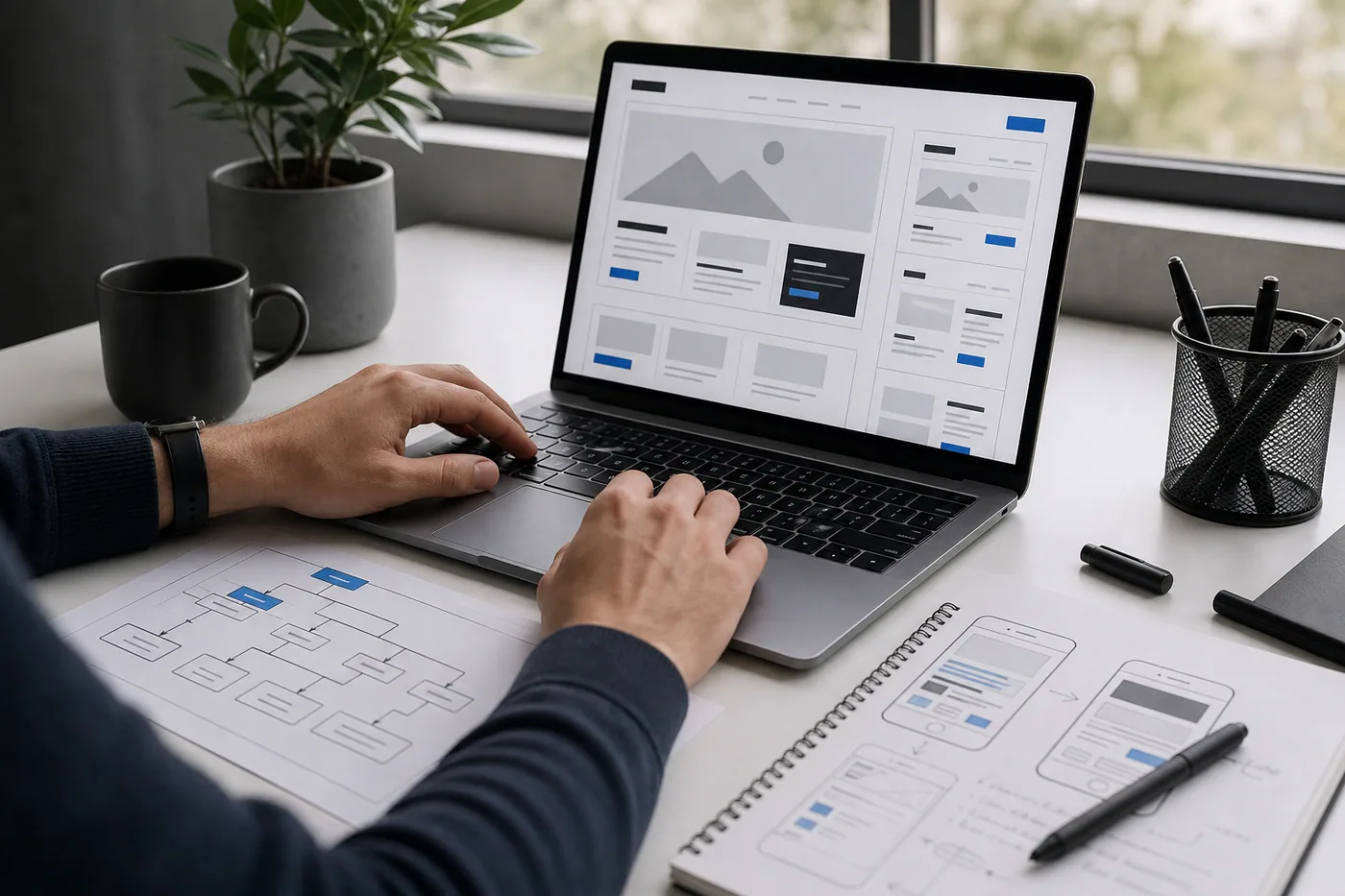
The page map and prototypes show where services, proof, pricing, FAQ and contact actions belong. At this point, it is cheaper to correct logic than after development.
Copy and design then work together. The visitor should understand the offer quickly without reading every line.
Launch is a checklist, not a button
Forms, telephone links, WhatsApp, analytics, responsive layouts, redirects, metadata and indexing controls must be tested before release.
After launch, the website needs observation. Real behaviour often reveals useful improvements that were invisible in a static mock-up.
A useful next check
- Can the right customer recognise the offer in the first screen?
- Are price, timing and scope explained clearly enough to qualify an enquiry?
- Do forms, phone links and WhatsApp work on a real mobile device?
- Is there evidence behind the main claims?
- Can search systems access a complete, stable page?